Модуль GPS высокой точности революция в навигационных технологиях
Добавить время:2025-12-27
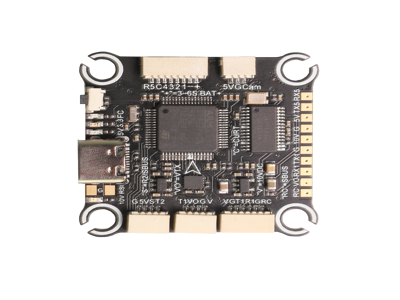
В современном мире, где технологии стремительно развиваются, навигационные системы играют ключевую роль в повседневной жизни и промышленности. От простых смартфонов до сложных беспилотных автомобилей – все они полагаются на точное определение местоположения. Однако традиционные GPS-системы, с их погрешностью в несколько метров, часто оказываются недостаточно точными для критически важных применений. Именно здесь на сцену выходят высокоточные GPS-модули, которые совершают настоящую революцию в навигационных технологиях. В этой статье мы глубоко погрузимся в мир высокоточного GPS, исследуя его принципы работы, инновации, применение и будущее, чтобы понять, как эти модули меняют наш мир.
Введение в высокоточный GPS: почему это важно
Навигационные технологии прошли долгий путь с момента появления первых спутниковых систем. GPS (Global Positioning System), разработанная США, стала стандартом для глобального позиционирования, но её точность, как правило, ограничена 5-10 метрами в обычных условиях. Это связано с различными факторами, такими как атмосферные помехи, ошибки часов спутников и многолучевое распространение сигналов. Для многих приложений, таких как навигация в городе или простой трекинг, этой точности достаточно. Однако в областях, где требуется сантиметровая или даже миллиметровая точность – например, в автономном вождении, сельском хозяйстве или геодезии – традиционный GPS явно не справляется.
Высокоточные GPS-модули решают эту проблему, используя передовые технологии, такие как Real-Time Kinematic (RTK) и Precise Point Positioning (PPP), которые позволяют достигать точности до нескольких сантиметров в реальном времени. Это не просто эволюция, а настоящая революция, открывающая новые возможности для инноваций. По данным исследований, рынок высокоточного GPS растёт со среднегодовым темпом роста (CAGR) более 10%, и ожидается, что к 2030 году его объём превысит 10 миллиардов долларов. Это подчёркивает огромный потенциал и востребованность этих технологий.
В этой статье мы рассмотрим, как работают высокоточные GPS-модули, их ключевые компоненты, преимущества перед традиционными системами, а также разнообразные применения across industries. Мы также обсудим challenges, такие как стоимость и сложность интеграции, и заглянем в будущее, где высокоточная навигация станет неотъемлемой частью умных городов и интернета вещей (IoT).
Как работает высокоточный GPS: принципы и технологии
Чтобы понять революцию, которую приносят высокоточные GPS-модули, важно сначала разобраться в основах спутниковой навигации. GPS relies on a constellation of satellites orbiting the Earth, which transmit signals containing timing and positional data. A GPS receiver calculates its position by measuring the time it takes for signals to travel from multiple satellites (typically至少 four) to the receiver. However, this process is prone to errors due to ionospheric and tropospheric delays, satellite clock inaccuracies, and other factors.
Высокоточные модули overcome these limitations through advanced techniques. One of the most common methods is Real-Time Kinematic (RTK). RTK uses a fixed base station with a known precise location to transmit correction data to a rover receiver. By comparing the signals received at both stations, the system can cancel out common errors, achieving centimeter-level accuracy in real-time. This requires a communication link, such as radio or cellular network, between the base and rover.
Another method is Precise Point Positioning (PPP), which uses precise orbit and clock data from global networks to compute corrections without a local base station. PPP can provide accuracy similar to RTK but with a longer convergence time, making it suitable for applications where real-time corrections are not critical. Modern high-precision modules often combine multiple technologies, including GLONASS, Galileo, and BeiDou, to enhance reliability and accuracy through multi-constellation support.
Key components of a high-precision GPS module include a high-sensitivity antenna, advanced signal processing algorithms, and support for correction services. These modules are designed to handle weak signals in challenging environments, such as urban canyons or dense foliage, ensuring consistent performance. The integration of inertial measurement units (IMUs) further improves accuracy by providing dead reckoning during signal outages.
In summary, high-precision GPS leverages sophisticated algorithms and additional data sources to drastically reduce errors, transforming navigation from meter-level to centimeter-level precision. This technological leap is driven by continuous improvements in hardware and software, making it accessible for a wide range of applications.
Ключевые инновации в высокоточных GPS-модулях
Революция в навигационных технологиях была бы невозможна без ряда ключевых инноваций. Во-первых, это развитие multi-frequency and multi-constellation support. Traditional GPS operates on the L1 frequency, but high-precision modules often use L2 and L5 frequencies, which are less affected by ionospheric delays. By combining signals from multiple satellite systems like GPS, GLONASS, Galileo, and BeiDou, these modules increase the number of available satellites, improving accuracy and reliability, especially in obstructed environments.
Во-вторых, advancements in correction services have been crucial. Services such as Satellite-Based Augmentation Systems (SBAS), e.g., WAAS in the US or EGNOS in Europe, provide free corrections for improved accuracy. For higher precision, commercial services like Trimble RTX or u-blox PointPerfect offer subscription-based corrections delivered via internet or satellite, enabling centimeter-level accuracy anywhere in the world. These services use global networks of reference stations to generate precise correction data.
Третья инновация – это miniaturization and integration. Early high-precision systems were bulky and expensive, but modern modules are compact, energy-efficient, and cost-effective. For example, modules from companies like u-blox, Septentrio, or Trimble integrate all necessary components into a small form factor, making them suitable for mass-market devices like smartphones and drones. This has democratized high-precision navigation, allowing it to be deployed in previously impractical scenarios.
Кроме того, AI and machine learning are being incorporated to enhance performance. Algorithms can predict and compensate for errors in real-time, adapt to changing environments, and improve signal tracking. For instance, AI can help mitigate multipath effects in urban areas by analyzing signal patterns and filtering out reflections.
These innovations collectively contribute to the revolution, making high-precision GPS not just a niche technology but a mainstream tool that drives progress across industries.
Применение высокоточного GPS в различных отраслях
Высокоточные GPS-модули находят применение в myriad industries, transforming operations and enabling new capabilities. Let's explore some of the most impactful areas.
Автономные автомобили и транспорт
В automotive industry, high-precision GPS is essential for autonomous driving. Self-driving cars require centimeter-level accuracy to navigate roads safely, avoid obstacles, and follow precise paths. Modules integrated with sensors like lidar and cameras use GPS for localization, ensuring the vehicle knows its exact position relative to high-definition maps. This enables features like lane-level navigation, automated parking, and platooning, where vehicles travel closely together to save fuel. Companies like Tesla, Waymo, and traditional automakers are heavily investing in this technology to make autonomous vehicles a reality.
Beyond cars, high-precision GPS is used in public transportation for real-time tracking and scheduling, in logistics for fleet management, and in aviation for precise landing approaches. The ability to know a vehicle's location with high accuracy improves safety, efficiency, and customer experience.
Сельское хозяйство и точное земледелие
In agriculture, high-precision GPS enables precision farming, which optimizes resource use and increases yields. Tractors and harvesters equipped with these modules can follow exact paths with minimal overlap, reducing seed, fertilizer, and pesticide usage. This not only saves costs but also minimizes environmental impact. GPS-guided systems allow for variable rate application, where inputs are applied based on soil conditions mapped with GPS data. Drones with high-precision GPS are used for crop monitoring, spraying, and mapping, providing farmers with detailed insights into their fields.
This technology has revolutionized modern farming, making it more sustainable and productive. Studies show that precision farming can increase efficiency by up to 20%, highlighting its transformative potential.
Геодезия и картографирование
Geodesy and mapping have always relied on precise positioning, and high-precision GPS has taken it to new heights. Surveyors use RTK GPS to measure land boundaries, construction sites, and topographic features with centimeter accuracy, reducing time and labor compared to traditional methods. In cartography, high-precision GPS is used to create detailed maps for navigation, urban planning, and disaster management. For example, during natural disasters, accurate maps generated with GPS data help in rescue operations and damage assessment.
Additionally, these modules are integral to infrastructure projects, such as building bridges, tunnels, and railways, where precise alignment is critical. The integration with BIM (Building Information Modeling) enhances collaboration and efficiency in construction.
Дроны и робототехника
Drones and robotics heavily depend on high-precision GPS for autonomous operation. In delivery drones, precise navigation ensures packages are dropped at the exact location, avoiding errors that could cause damage or loss. In agricultural drones, GPS enables precise spraying and data collection. Robotics applications include warehouse automation, where robots use GPS-like systems for indoor and outdoor navigation, and search-and-rescue missions, where accuracy can save lives.
The ability to operate autonomously in dynamic environments makes high-precision GPS a cornerstone of the drone and robotics revolution, driving innovations in logistics, entertainment, and security.
Интернет вещей (IoT) и умные города
In the IoT ecosystem, high-precision GPS enables smart devices to know their location accurately, facilitating applications like asset tracking, smart parking, and environmental monitoring. For instance, in smart cities, GPS modules in vehicles and infrastructure help manage traffic flow, reduce congestion, and improve public safety. Wearables with high-precision GPS can provide accurate fitness tracking and emergency location services.
As cities become smarter, the demand for precise positioning will grow, enabling seamless integration of technology into urban life. This includes everything from autonomous public transport to intelligent energy management.
Морская и авиационная навигация
In marine navigation, high-precision GPS is used for port operations, dredging, and offshore activities, where accurate positioning is vital for safety and efficiency. In aviation, it supports precision approaches and landing, especially in adverse weather conditions, reducing the risk of accidents. The integration with other systems like ADS-B (Automatic Dependent Surveillance-Broadcast) enhances air traffic management.
These applications demonstrate how high-precision GPS is pervasive, touching nearly every aspect of modern life and industry.
Преимущества и вызовы высокоточного GPS
Высокоточные GPS-модули offer numerous benefits, but他们也 come with challenges that need to be addressed for widespread adoption.
Преимущества
• Повышенная точность: Centimeter-level accuracy enables applications that were previously impossible, such as autonomous driving and precise agriculture. • Улучшенная надежность: Multi-constellation support reduces dependency on a single system, ensuring continuity even if one system fails. • Эффективность: In industries like agriculture and logistics, precision leads to resource savings and increased productivity. • Безопасность: Accurate navigation reduces accidents in transportation and improves response times in emergencies. • Инновации: Opens doors for new technologies and business models, driving economic growth.
Вызовы
• Стоимость: High-precision modules and correction services can be expensive, though prices are decreasing with mass adoption. • Сложность: Integration requires expertise in hardware and software, which can be a barrier for some users. • Зависимость от инфраструктуры: RTK systems need base stations or internet connectivity for corrections, which may not be available in remote areas. • Проблемы с сигналом: Urban environments with tall buildings can cause multipath errors, though advanced algorithms mitigate this. • Конфиденциальность и безопасность: Precise location data raises concerns about privacy and potential misuse, necessitating robust security measures.
Despite these challenges, the benefits far outweigh the drawbacks, and ongoing research is focused on overcoming these obstacles. For example, developments in PPP technology are reducing the need for local infrastructure, and AI is improving performance in challenging conditions.
Будущее высокоточного GPS: тенденции и прогнозы
Революция в навигационных технологиях далека от завершения. Будущее high-precision GPS promises even greater advances. One key trend is the integration with 5G networks. 5G offers low latency and high bandwidth, enabling real-time correction data transmission and enhancing the performance of high-precision systems. This synergy will be crucial for applications like autonomous vehicles and smart cities, where instant communication is vital.
Another trend is the convergence with artificial intelligence. AI algorithms will continue to improve error correction, predict positional changes, and adapt to environments autonomously. For instance, AI could learn from historical data to anticipate signal disruptions and switch to alternative navigation methods seamlessly.
The expansion of satellite constellations will also play a role. With new satellites being launched for systems like Galileo and BeiDou, the availability of signals will increase, further improving accuracy and reliability. Projects like SpaceX's Starlink might even incorporate navigation capabilities, adding another layer to the ecosystem.
In terms of applications, we can expect high-precision GPS to become ubiquitous in consumer devices. Smartphones, wearables, and even household appliances will leverage this technology for enhanced functionality. In healthcare, for example, precise location tracking could assist in patient monitoring and emergency services.
Moreover, sustainability will be a focus. High-precision GPS can contribute to environmental conservation by optimizing routes in transportation to reduce emissions, or in wildlife tracking to protect endangered species.
Looking ahead, the market for high-precision GPS is poised for exponential growth. According to forecasts, by 2030, over 80% of new vehicles will incorporate some form of high-precision navigation, and IoT devices with GPS will number in the billions. This underscores the transformative impact of this technology.
Заключение: революция продолжается
Высокоточные GPS-модули indeed represent a revolution in navigation technology. By delivering centimeter-level accuracy, they have unlocked possibilities across industries, from autonomous vehicles to precision agriculture, and are paving the way for a smarter, more connected world. The innovations in multi-frequency support, correction services, and miniaturization have made this technology accessible and powerful.
As we move forward, the integration with emerging technologies like 5G and AI will further amplify its capabilities, addressing current challenges and expanding its applications. The future holds promise for even greater precision, reliability, and affordability, making high-precision navigation an integral part of our daily lives.
В заключение, революция, начатая high-precision GPS, только набирает обороты. Она не только улучшает existing processes но и создает совершенно новые opportunities для innovation и growth. Whether you're a technologist, entrepreneur, or simply a curious individual, understanding this revolution is key to navigating the future. Embrace the change – because with high-precision GPS, the world is becoming a more precise and efficient place.
This article has covered the essentials, but the journey is ongoing. Stay tuned for more developments in this exciting field!
