Будущее дронов с вертикальным взлетом и посадкой
Добавить время:2025-12-29
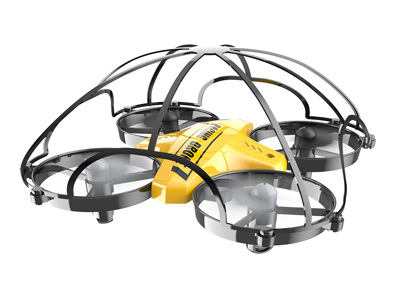
Добро пожаловать в мир дронов с вертикальным взлетом и посадкой (VTOL)! Эти устройства, способные подниматься и садиться вертикально, как вертолеты, но с эффективностью самолетов, открывают новые горизонты в технологиях, транспорте и повседневной жизни. В этой статье мы погрузимся в детали, исследуя, как VTOL дроны меняют наше представление о мобильности, логистике и безопасности. От первых прототипов до футуристических концепций – мы рассмотрим все аспекты, включая технические инновации, экономические выгоды, экологические преимущества и социальные последствия. Приготовьтесь к захватывающему путешествию в будущее, где небо станет новой дорогой для человечества.
Введение в технологию VTOL
Технология вертикального взлета и посадки (VTOL) не нова – она существует с середины XX века, в основном в военной и специализированной авиации, такой как вертолеты и самолеты типа Harrier. Однако, с развитием беспилотных систем и электрических двигателей, VTOL дроны стали более доступными, эффективными и многофункциональными. В основе VTOL лежит способность взлетать и садиться без необходимости в длинной взлетно-посадочной полосе, что делает их идеальными для городских сред и удаленных местностей. Современные VTOL дроны часто комбинируют преимущества вертолетов (маневренность) и самолетов (скорость и дальность), используя электрические или гибридные силовые установки. Это позволяет снизить шум, выбросы и эксплуатационные costs, открывая door для массового adoption.
Ключевые компоненты VTOL дронов включают: многороторные системы для стабилизации при взлете и посадке, крылья для эффективного полета в горизонтальном режиме, продвинутые системы управления полетом на основе искусственного интеллекта, и энергоэффективные батареи или топливные элементы. Например, компании like Joby Aviation и EHang разрабатывают пассажирские VTOL дроны, которые promise revolutionize urban mobility. С улучшением battery technology, such as solid-state batteries, дальность полета increases, making long-distance travel feasible. Additionally, autonomous navigation systems enable these drones to operate safely in complex environments, reducing the need for human pilots and lowering costs.
Преимущества VTOL technology are numerous: reduced infrastructure requirements (no need for runways), lower environmental impact compared to traditional aircraft, and enhanced accessibility for emergency services and cargo delivery. However, challenges remain, including regulatory hurdles, public acceptance, and technical issues like battery life and safety. As we move forward, collaboration between governments, industries, and communities will be crucial to harness the full potential of VTOL drones. In the following sections, we will explore these aspects in depth, from current applications to future visions.
Технологические инновации и дизайн
Разработка VTOL дронов involves cutting-edge innovations in aerodynamics, materials science, and electronics. Modern designs often feature tilting rotors or wings, allowing seamless transition between vertical and horizontal flight. For instance, the Lilium Jet uses electric ducted fans that can pivot, providing lift during takeoff and thrust during cruise. This design minimizes energy consumption and noise, making it suitable for urban operations. Materials like carbon fiber and advanced composites reduce weight while maintaining strength, essential for maximizing payload capacity and efficiency.
Another key innovation is in propulsion systems. Electric motors are becoming the standard due to their high efficiency, low maintenance, and zero emissions. Companies are investing in high-energy-density batteries, such as lithium-sulfur or lithium-air, which could extend flight times to several hours. For longer missions, hybrid systems combining electric motors with internal combustion engines or fuel cells are being explored. These systems offer the flexibility of electric takeoff and landing with the range of traditional fuels, addressing current limitations in battery technology.
Avionics and control systems are also advancing rapidly. Artificial intelligence (AI) and machine learning algorithms enable autonomous flight, obstacle avoidance, and optimal route planning. Sensors like LiDAR, cameras, and radar provide real-time data for navigation, even in adverse weather conditions. Moreover, connectivity through 5G networks allows for remote monitoring and control, enhancing safety and operational efficiency. As these technologies mature, we can expect VTOL drones to become smarter, safer, and more integrated into our daily lives. Future designs might include modular components for easy customization, such as swapable payloads for different applications, from medical transport to surveillance.
Применение в городской мобильности
Одно из самых promising applications of VTOL drones is in urban air mobility (UAM). Imagine a future where you can hail a flying taxi to avoid traffic jams and reach your destination in minutes instead of hours. Companies like Uber Elevate and Volocopter are working on VTOL aircraft for passenger transport, with plans to launch services in cities like Los Angeles and Singapore by the mid-2020s. These air taxis could reduce congestion on roads, lower travel times, and provide a new layer of transportation infrastructure.
UAM involves creating vertiports – small landing pads integrated into buildings or dedicated areas – for takeoff and landing. This requires urban planning and regulatory approval, but the benefits are substantial. For example, a study by NASA estimates that UAM could handle up to 20% of urban trips in dense metropolitan areas, significantly reducing greenhouse gas emissions from ground transportation. Moreover, VTOL drones can be used for emergency medical services, rapidly transporting patients or organs to hospitals, saving lives in critical situations.
Challenges in UAM include noise pollution, safety concerns, and public acceptance. To address these, developers are focusing on quiet electric propulsion and robust safety systems, such as redundant rotors and parachutes. Public demonstrations and education campaigns are essential to build trust. As technology improves and costs decrease, UAM could become a affordable option for daily commuting, transforming how we perceive urban travel. In the long term, integrated systems with autonomous ground vehicles and public transit could create seamless multi-modal transportation networks.
Логистика и доставка грузов
VTOL дроны are revolutionizing logistics and cargo delivery, offering faster and more efficient alternatives to traditional methods. Companies like Amazon Prime Air and Zipline are already using drones for last-mile delivery of packages, medical supplies, and food. VTOL capabilities allow these drones to access remote or congested areas where trucks or planes cannot easily reach, reducing delivery times from days to hours or even minutes.
In the e-commerce sector, VTOL drones can handle same-day deliveries, enhancing customer satisfaction and reducing logistics costs. For instance, in rural areas, drones can deliver essential goods without the need for expensive infrastructure. In disaster relief scenarios, they can transport supplies to affected regions quickly, bypassing damaged roads. The use of autonomous systems means that deliveries can be made 24/7, increasing efficiency and scalability.
However, logistical challenges include payload limitations, weather dependencies, and regulatory restrictions. Current VTOL drones can carry payloads up to a few hundred kilograms, but advancements are needed for heavier cargo. Weather-resistant designs and improved navigation systems are being developed to operate in various conditions. Regulations are evolving to allow beyond visual line of sight (BVLOS) operations, which is crucial for widespread adoption. As these issues are addressed, VTOL drones could become a standard part of global supply chains, reducing carbon footprints and improving resilience in logistics networks.
Безопасность и регулирование
Безопасность является paramount for the adoption of VTOL drones. These aircraft must meet stringent standards to ensure they do not pose risks to people, property, or other aircraft. Key safety features include redundant systems (e.g., multiple rotors and batteries), fail-safe mechanisms, and advanced collision avoidance technology. For example, many VTOL drones are equipped with parachutes or airbags for emergency landings. Additionally, real-time monitoring and remote control capabilities allow operators to intervene if necessary.
Regulatory frameworks are still in development worldwide. Agencies like the FAA in the U.S. and EASA in Europe are working on certification processes for VTOL aircraft, focusing on airworthiness, pilot training (for manned versions), and operational rules. Issues such as air traffic management for low-altitude flights, privacy concerns, and insurance requirements need to be addressed. Public consultation and international collaboration are essential to create harmonized regulations that foster innovation while ensuring safety.
Education and training are also critical. As VTOL drones become more autonomous, the role of human operators may shift to monitoring and management. Training programs for maintenance, programming, and emergency response will be needed to support this new industry. By proactively addressing safety and regulatory challenges, we can build a foundation for sustainable growth and public trust in VTOL technology.
Экологические аспекты и устойчивость
VTOL дроны offer significant environmental benefits compared to traditional transportation. Electric VTOL aircraft produce zero emissions during flight, reducing air pollution and contributing to climate change mitigation. Even hybrid systems can be more efficient than conventional vehicles, especially in urban settings where short hops replace car trips. Lifecycle analyses show that, with renewable energy sources for charging, the carbon footprint of VTOL drones can be minimal.
Moreover, VTOL technology can reduce noise pollution. Electric motors are quieter than combustion engines, making them suitable for densely populated areas. This is a key advantage for urban air mobility, where community acceptance depends on minimal disruption. However, the production and disposal of batteries pose environmental challenges. Advances in recycling and the development of sustainable materials are needed to address these issues.
Overall, VTOL drones align with global sustainability goals, such as the UN's Sustainable Development Goals, by promoting clean energy, reducing congestion, and improving access to services. As the technology scales, it could play a vital role in creating greener, more resilient cities. Future innovations might include solar-powered VTOL drones or those using hydrogen fuel cells, further enhancing their eco-friendly credentials.
Экономическое влияние и рыночные перспективы
Рынок VTOL дронов is poised for explosive growth. According to market research, the global VTOL aircraft market could reach billions of dollars by 2030, driven by demand in transportation, logistics, and defense. Startups and established aerospace companies are investing heavily in R&D, with venture capital flowing into this sector. For example, Joby Aviation raised over $1 billion in funding, highlighting investor confidence.
Economic benefits include job creation in manufacturing, maintenance, software development, and operations. New business models, such as drone-as-a-service, could emerge, allowing companies to lease VTOL capabilities without upfront investment. In emerging economies, VTOL drones could leapfrog traditional infrastructure, providing affordable mobility and logistics solutions. However, high initial costs and regulatory uncertainties may slow adoption in the short term.
To capitalize on this potential, governments can support innovation through grants, tax incentives, and infrastructure development. Partnerships between public and private sectors will be key to scaling VTOL technology. As costs decrease through mass production and technological advancements, VTOL drones could become ubiquitous, transforming industries and boosting economic productivity.
Социальные и культурные последствия
Внедрение VTOL дронов will have profound social and cultural impacts. On the positive side, they can enhance quality of life by reducing commute times, improving access to healthcare and education, and enabling new forms of entertainment (e.g., aerial photography and sports). In remote communities, VTOL drones could bridge gaps in transportation and supply chains, fostering inclusion and development.
However, there are concerns about privacy, as drones equipped with cameras could be used for surveillance. Ethical guidelines and laws will be needed to prevent misuse. Additionally, the shift to autonomous systems may disrupt jobs in traditional transportation sectors, requiring retraining and social support programs. Public perception will play a crucial role; transparent communication and community engagement can help address fears and build acceptance.
Culturally, VTOL drones might change how we interact with our environment, making the sky a new frontier for human activity. This could inspire art, literature, and new social norms. By embracing these changes responsibly, society can harness the benefits of VTOL technology while mitigating negative effects.
Будущие тренды и прогнозы
Looking ahead, the future of VTOL drones is bright and full of possibilities. We can expect continued innovation in energy storage, with batteries that offer longer ranges and faster charging. Autonomous technology will advance, enabling fully self-flying drones that can operate in swarms for coordinated tasks, such as disaster response or large-scale deliveries.
Integration with other technologies like the Internet of Things (IoT) and blockchain could enhance logistics tracking and security. In the long term, VTOL drones might evolve into personal flying vehicles, similar to cars today, with ownership models ranging from private to shared mobility. Space applications are also on the horizon, with VTOL concepts for lunar or Martian exploration.
Challenges such as regulatory harmonization, cybersecurity, and ethical considerations will need ongoing attention. But with collaborative efforts, VTOL drones could become a cornerstone of future transportation systems, making the world more connected, efficient, and sustainable. The sky is no longer the limit – it's the next great frontier for innovation.
Заключение
В заключение, VTOL дроны represent a transformative technology with the potential to reshape our world. From urban mobility to logistics, safety to sustainability, they offer solutions to some of today's most pressing challenges. While obstacles remain, the pace of innovation and growing investment signal a promising future. By embracing this technology with careful planning and ethical considerations, we can unlock new opportunities for growth and improvement. The journey has just begun, and the possibilities are endless. Let's soar into the future together with VTOL drones!
